
What is ISA
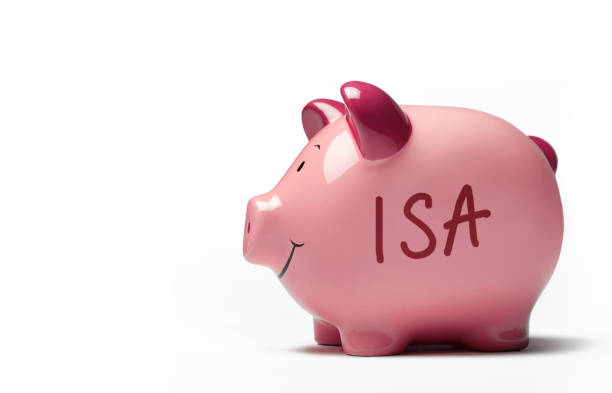
Investment Savings Account (ISA) is an account designed to help residents of the United Kingdom to save or invest their money in a tax-efficient way. This means any accumulated interest earned is tax free. Did you know that according to recent data from The financial Association and Opinium, and with reference to theia.org recent publication in March 2025, a quarter (25%) of UK adults who have heard of stocks and shares ISAs do not know anything about them, and nearly one in five (17%) have “never heard” of the financial instrument.
From April 6 to April 5 of the next year in every tax year, the Government establishes a maximum amount you can contribute to an ISA. As it stands, this total limit is £20,000, according to GOV.UK. You have the option to distribute this amount among various types of ISAs, each of which has its own specific limits.
You must be 18 or over to open an ISA. However, if you’re opening a Lifetime ISA you must also be under 40. Additionally, you must either be
- a resident of the United Kingdom
- a member of the armed services, a Crown employee (such as a diplomat or civil servant abroad), or, if you do not reside in the UK, their spouse or civil partner.
Types of ISA
Cash ISA
With Cash ISA, you can deposit an amount up to £20000 in a tax year. Depending on the institution or broker, the interest earned is relatively variable. You can accumulatively earn between 1% to 4.5% AER. Banks such as Lloyds offer different types of ISA such as fixed short-term and fixed long-term with varying interest rates.
To find more, kindly get in touch with them. You can also use online platforms like Trading 212, Moneybox, Revolut Ltd as well.
Stocks and Shares ISA
Stocks and Shares ISA gives you the ability to buy some percentage of individual stocks and shares of some high performing companies in the world. Example of these companies could be Microsoft, Apple, Nvidia, Tesla, Amazon, etc.
You can also have the option to buy Funds/EFT’s which comprise of accumulated shares or stocks under one umbrella. Some of the popular EFT’s are S&P 500, FTSE 100, Global Shares, VUSA, Artificial Intelligence (AI) and others. This helps you to invest in multiple companies without selecting individual company stocks.
The average annual interest rate for Index Funds ranges between 3%-6%. However, do bear in mind that you can equally earn less than your invested capital. Some institutions apply charges for using their platform for your investment.
Lifetime ISA (LISA)
People mostly confuse Lifetime ISA with other ISA’s. This is intended to assist people between the ages of 18 and 39 in saving for retirement or their first house. Up to £4,000 (with a maximum bonus of £1,000 annually), the government offers a 25% bonus on contributions. Contributions are allowed until age 50, however withdrawals for purposes other than retirement (after age 60) or a first home purchase (up to £450,000) are subject to a 25% government withdrawal fee.
So if you have an intention other than buying a house, then I would recommend looking into other types of the ISA’s.
Innovative Finance ISA (IFISA)
This is a type of ISA that lets you lend your money directly to borrowers, and later, they have to repay the principal plus interest over time. Through peer-to-peer (P2P) lending platforms, you may lend your money to people or businesses and earn tax-free interest. The yearly ISA allowance, which is £20,000 is the maximum amount you can invest. Although IFISAs have the potential to yield greater returns than cash ISAs, they are not protected by the Financial Services Compensation Scheme (FSCS) and have risks, such as the potential for borrower failure.
Kindly bear in mind that unlike a Stocks and Shares ISA (which protects up to £85,000 if the provider goes bust), an IFISA is not covered by the FSCS, though this protection does not cover losses from poor investment performance
Platforms to Invest with
High Street Banks
Most banks in the UK offer the opportunity for its residents to invest using their platforms. Banks such as Lloyds, Barclays, NatWest, HSBC and many other offer such opportunities. Familiar and trusted institutions.
Some people might opt to use their high street bank because their ISA will sit alongside their other accounts which provides easy oversight. Also banks are familiar and are trusted institutions. Some offer access to funds run by their own asset managers.
However, there are some cons users need to bear in mind when using high street banks. Some of these are not limited to;
- Limited investment choices — usually only their in-house funds, not the whole market.
- Higher fees (management + platform). Even a 1% annual fee eats thousands over decades.
- Service is usually geared more toward “wealth management” clients with larger sums.
Moneybox
Moneybox offers pre-built Cautious / Balanced / Adventurous portfolios made from tracker funds and ETFs. They’re designed for different risk profiles and historically aim to beat cash over the decade, but they carry platform & fund fees (platform ~0.45% + fund OCFs + subscription). Moneybox’s Balanced is typically lower-cost than a bank’s managed solution.
Likewise high street banks, Moneybox platform also offer some benefits. These are not limited to;
- Simple, beginner-friendly — it is easier to set up in minutes.
- Flexible contributions – you can round up your spendings to be invested as well and also setting monthly direct debits.
- You have the choice to choose between Cautious, Balanced, Adventurous portfolios managed by BlackRock, Fidelity, etc.
- Fees are transparent and relatively cheaper.
There are other platforms such as Trading 212, eToro, Plum and many others you can explore yourself by doing further find findings and research.
My thoughts
In today’s fast-paced world, many people subscribe to multiple entertainment platforms like Netflix, Sky, Disney+, and others often spending over £100 a month without hesitation. While entertainment has its place, dedicating an average of 2–4 hours daily to television could instead be invested in building your financial literacy. By watching educational YouTube channels, listening to personal finance podcasts, or reading e-books and blogs about investing, you can begin to understand how money truly works and how to make it work for you.
Similarly, rather than spending £10 a week on lottery tickets which statistically have a 0.0015% chance of winning, you could redirect that same amount into a Stocks and Shares ISA. Platforms like Moneybox, Trading 212, or Vanguard allow you to invest tax-efficiently in global markets, including index funds such as the S&P 500, which has historically delivered an average annual return of 6–8%. Over 40 years, consistent investing of just £10 per week could potentially grow into over £200,000, thanks to the power of compound interest.
It’s important to recognize that employees often pay the highest taxes, while the wealthy leverage investments and strategic planning to minimize theirs legally. Your salary may cover your immediate needs, but your investments can secure both your needs and long-term financial freedom. The so-called rat race isn’t ending anytime soon but by investing early, wisely, and consistently, you can choose to step out of it and take control of your financial future.
💡Disclaimer
This article is for educational purposes only and does not constitute financial advice. All investments carry risks, including the potential loss of capital. Always do your research or consult with a qualified financial advisor before investing. Also, affiliate links on this post may earn the author a small commission at no extra cost to you. Credit to gettyimages.
FAQs
If you accidentally put more than £20000 in your ISA account, ISA providers are required to report contributions to HMRC. That said, HMRC system will flag it. They’ll write to you explaining the over-subscription and what you need to do. Sometimes they instruct the provider to remove the excess amount from your ISA.
Any money over the £20,000 limit is treated as a regular investment, not protected by the ISA wrapper. That means you may owe Capital Gains Tax (CGT) or Dividend Tax on returns from the excess portion. HMRC usually asks you or your provider to remove the excess contribution. If you’ve made investment gains on it, you could lose those gains when it’s corrected.
Yes, without losing any tax advantages, you can withdraw funds from an Individual Savings Account (ISA) whenever you choose. Examine your ISA’s terms to determine whether there are any restrictions or fees associated with withdrawals.
However, there are different rules for taking your money out of a Lifetime ISA. Your current year’s limit will not be reduced if your ISA is “flexible,” meaning you can withdraw money and then reinvest it within the same tax year. You can check with your provider to see if your ISA is flexible.
Depending the type of ISA account and the provider, you can start with as low as £1. However, with Moneybox, to enjoy the AER interest rate, you would need £500 to open an account.
Yes, you can create a portfolio that has a percentage of each type of ISA account. However, you must bear in mind that you cannot invest beyond £20000 in a tax year. This means that the total amount invested in all the the account combined shouldn’t exceed your subscription limit £20000.